If you are a psychologist, neuroscientist or vision researcher who uses a computer to run experiments and report timing accuracy in units of a millisecond, then it is likely your timings are wrong!
It is recognized that online and cross-platform studies are most susceptible to timing variation regardless of system used. Online systems include: PsyToolkit, Labvanced, Gorilla, Testable, Pavlovia or jsPsych among others.
Timing error affects your work even when you use standalone experiment generator software such as: E-Prime, MATLAB, PsychToolbox, PsychoPy, Presentation, Inquisit, Superlab, OpenSesame and PEBL etc. Online and lab-based psychology experiments are equally prone to timing errors.
The Black Box ToolKit Ltd specializes in professional measurement and calibration products that help you achieve millisecond accurate stimulus presentation and response timing, synchronization and TTL event marking, or triggering, in your computer-based experiments. Remember poorly controlled psychology experiments can lead to replication failure, spurious results, questionable conclusions and bad science. Product comparison table. | Show Me
BBTK v3
|
USB response pad |
mBBTK v2 |
||
 |
 |
 |
||
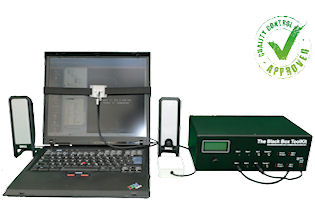
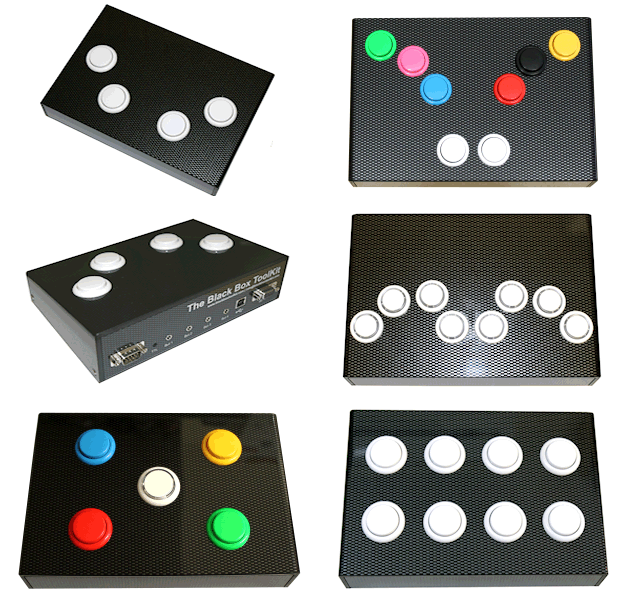
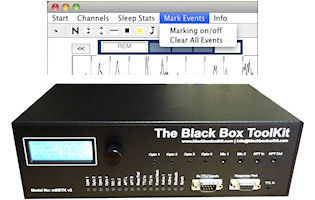
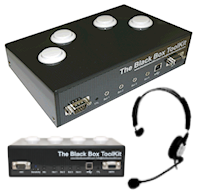
| Presentation, synchronization & response timing validation. Independently check onsets and duration of stimulus images, sounds or event marks against responses. Tune your experiments accuracy by automatically simulating a millisecond accurate human. Show Me | Accept responses on up to 8 buttons. Turns a button press into a USB keyboard keystroke as if a key had been pressed on a real keyboard. Full Speed USB keyboard HID with 1 ms latency (1,000 Hz). Show Me | Complex real time timestamping and TTL event marking/TTL triggers. Timing critical independent TTL event marking of stimulus images, sounds, TTL inputs or response pad button presses in EEG, Neurophysiology and eye tracking studies. Show Me | ||
Advanced USB response pad with timer, light sensor & voice key
|
USB response pad & voice key |
USB response
|
||
 |
 |
 |
||
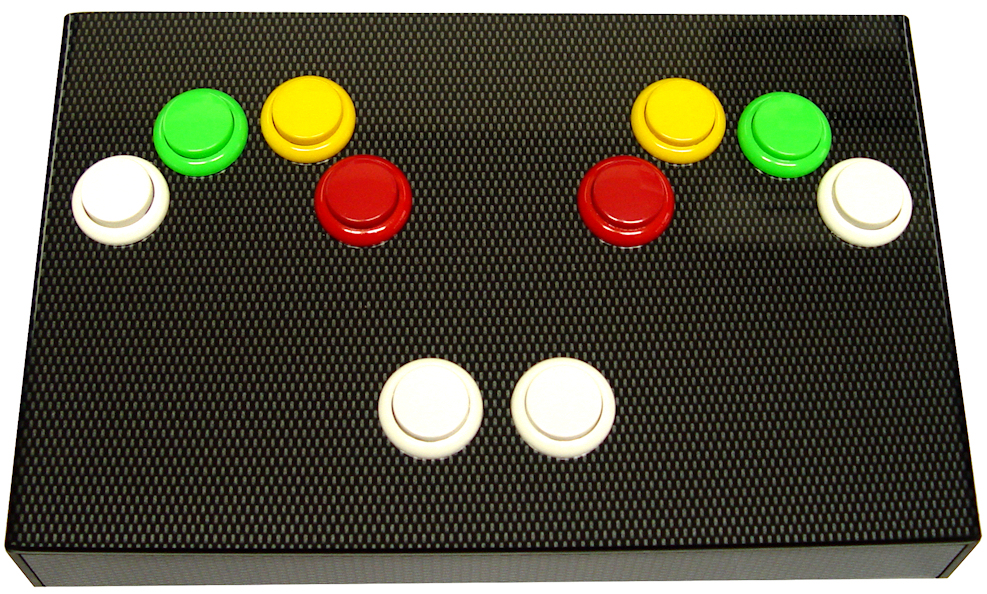
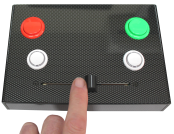
| USB serial response pad with independent millisecond timer, light sensor & voice key. Streams activity on up to 10 buttons and all timings over serial. Also turns a button press, light sensor or vocal response into a USB keyboard keystroke for ease of integration with existing experimental scripts. Show Me | Accept responses on up to 8 buttons and vocal response via a mic. Turns a button press or vocal response into a USB keyboard keystroke. Show Me | USB response pad with 1024 position slider/fader that works like a USB keyboard. Great for Likert Scales and Judgement and Decision Making studies. Plus accept responses on up to 4 buttons. Show Me | ||
| |
||||
1-5 button pressure sensitive force activated USB response pad |
4 port USB response box |
Hand-held USB response button |
||
|
|
 |
 |
||
| USB response pad that streams pressure sensitive force data as a participant presses a button. Also appears as a standard keyboard for ease of integration with existing experimental scripts. Show Me |
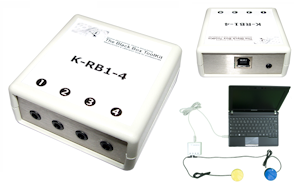
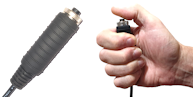
Accept responses on up to 4 external buttons, hand-held triggers or foot pedals. Turns an external button press into a USB keyboard keystroke. Show Me | Accept responses on USB hand-held button. Turns a button press into a USB keyboard keystroke. Show Me | ||
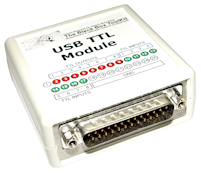
USB TTL module |
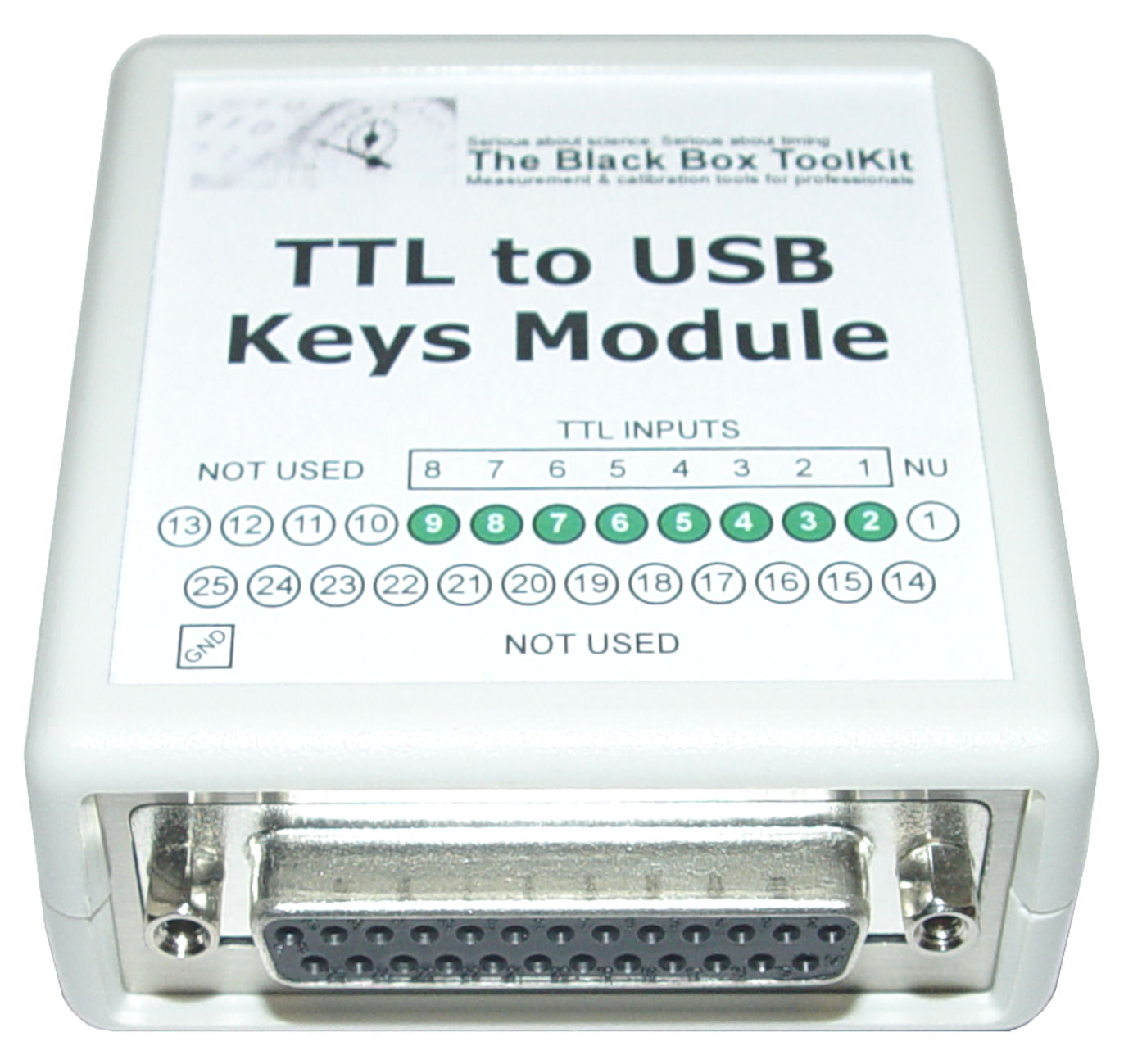
TTL to USB keys module |
Consultancy services and custom built devices |
||
 |
 |
 |
||
| Basic event marking. Acts as a USB parallel port replacement to allow basic TTL event marking/TTL triggers from any experiment generator that supports a serial port. Show Me | Turns a TTL signal into a keystroke. Converts any TTL input into a keyboard key press, keystroke, or value if a TTL pattern is detected. Show Me | We can produce one-off custom built devices for a reasonable cost or customize one of our existing products for your exact requirements. |
Ask yourself, are you:
- Aware of millisecond timing error in your own experiments?
- Confident you can replicate experiments using different hardware and software in another lab?
- Always carrying out the experiments you assume you are?
Not sure which of our products could benefit you most? Take a look at our product comparison table or contact us for free and impartial advice.